Gregory John Nussbickel

Gregory John Nussbickel

Gregory John Nussbickel
The Nussbickel Law Firm PA
Experience: 23 years
Probate, Estate Planning and Elder Law
Florida and Federal Circuit
Client Champion Platinum, Client Champion Platinum and 2 others
•••-•••-9455
Free consultation have
Awards 4
Experience 23y
Videos 23
Online & Web 6

Biography Submit listing

Whether you're handling a loved one's estate, or planning your own - we're here to help. We take pride in our caring, comprehensive, and cost-effective approach. Thousands of clients proudly served right here in Southwest Florida.

Attorney Greg Nussbickel has been practicing Trust and Estate law for the better part of twenty (20) years. His legal experience spans large firm, public interest, and higher education.

Before graduating cum laude from F.S.U. Law, Greg externed at The Florida Supreme Court. He later obtained a Master of Laws degree from U.M. Greg contributes to legal education platforms, and has been featured on major news outlets. In his free time, Greg enjoys skiing, SCUBA, and chasing after his spirited toddler: "Ella."

Jurisdictions Admitted to Practice

Florida

Since 2002

Federal Circuit

Since 2005

Professional Experience

2004 - Current

The Nussbickel Law Firm PA

Founder

2002 - 2004

Roetzel & Andress LPA

Associate

2002 - 2002

The Supreme Court of Florida

Judicial Extern

Education

2006 - 2007

University of Miami

LL.M. (2007) | Master of Laws

1999 - 2002

Florida State University College of Law

J.D. (2002)

Honors: Cum Laude

Awards

year - Gregory John Nussbickel
Client Champion Platinum

Martindale-Hubbell

year - Gregory John Nussbickel
Client Champion Platinum

Martindale-Hubbell

year - Gregory John Nussbickel
Client Champion Award

Martindale-Hubbell

year - Gregory John Nussbickel
Top Lawyers in Florida

The Legal Network

Contacts

The Nussbickel Law Firm, P.A. 12500 Brantley Commons Ct. Suite 103 Fort Myers FL 33907 Telephone: •••-•••-9455

Videos

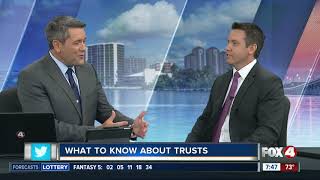
What Is a Trust? Florida Trust Basics Explained | Fox 4 Interview
What is a trust in Florida? Attorney Greg Nussbickel explains trust basics on Fox 4 — settlor, trustee, beneficiary, and why funding matters.

This is an archived Fox 4 news segment that originally aired in August 2019. The affiliation shown on screen is no longer current, and the current contact information for The Nussbickel Law Firm, P.A. is below. In the segment, Fort Myers estate planning attorney Gregory J. Nussbickel walks through what a Florida trust actually is, how it differs from a will, and why a trust that is never reviewed or never funded may not do what the family expected. He explains the three roles in every trust — settlor, trustee, and beneficiary — and how a trust can be used to plan for incapacity. One point worth adding: a trust can help avoid probate for the assets actually retitled into it; anything left in your own name generally still goes through probate.

In this video:
• What a trust is, in plain English, and why it is not only for the very wealthy
• The roles of settlor, trustee, and beneficiary, explained with a simple family example
• How a trust differs from a will, and why assets passing under a will go through probate
• Two common mistakes: never updating the plan, and never funding assets into the trust
• Why a review every few years makes sense as laws and family circumstances change
• Using a trust to plan for your own incapacity and to add protection around gifts to beneficiaries

Chapters:
0:00 Intro
0:24 What Is a Trust?
0:58 Trust vs. Will
1:22 Common Mistakes With Trusts
2:00 How Often to Review Your Trust
2:27 Incapacity Planning and Protecting Beneficiaries


The Nussbickel Law Firm, P.A. — Florida Wills, Trusts, and Probate — Streamlined
Gregory J. Nussbickel, Attorney
12487 Brantley Commons Court, Fort Myers, FL 33907
(239) 900-WILL | (239) 900-9455
https://will.estate

If it has been several years since anyone looked at your trust, or you are not sure whether your assets were ever funded into it, we can review it with you.

This video is general information about Florida law, not legal advice, and watching it does not create an attorney-client relationship. Laws change and every situation is different — consult a Florida attorney about your own circumstances.

#FloridaTrusts #EstatePlanning #FortMyersEstatePlanning
Views 81
Likes 0
Dislikes 0
Comments 1
Florida Will Requirements: What Makes a Will Valid? | Fox 4
What makes a will valid in Florida? Attorney Greg Nussbickel covers signing requirements, probate, out-of-state wills, and dying without one — on Fox 4.

This is an archived Fox 4 news segment that originally aired in July 2019. The affiliation and the phone number shown on screen are no longer current; the current contact information for The Nussbickel Law Firm, P.A. is below. In the segment, Fort Myers estate planning attorney Gregory J. Nussbickel walks through the basics of Florida wills: the formalities a will has to meet, why a will does not take effect on its own but must be submitted to the probate court, and what happens to a will signed in another state before the family moved to Florida. He closes with what Florida law does when someone dies with no will at all. Two things have moved since 2019 — Florida now has an electronic wills framework, and out-of-state wills are treated more generously than the segment suggests. Both are covered in the pinned comment.

In this video:
• The formalities a Florida will has to meet: in writing, signed by the testator, and witnessed
• Why a will does not self-execute, and how it is submitted and proved in probate court
• Whether a will written in another state still works after you move to Florida
• Why an out-of-state executor may not qualify to serve as personal representative here
• What happens when there is no will, and how Florida's intestacy laws decide instead


The Nussbickel Law Firm, P.A. — Florida Wills, Trusts, and Probate — Streamlined
Gregory J. Nussbickel, Attorney
12487 Brantley Commons Court, Fort Myers, FL 33907
(239) 900-WILL | (239) 900-9455
https://will.estate

If you moved to Florida with a will from another state, or you have been meaning to get one done and never have, we can walk you through what Florida requires.

This video is general information about Florida law, not legal advice, and watching it does not create an attorney-client relationship. Laws change and every situation is different — consult a Florida attorney about your own circumstances.

#FloridaWills #Probate #EstatePlanning
Views 69
Likes 1
Dislikes 0
Comments 1
How Long Do Creditors Have to Claim Against a Florida Estate?
How long can creditors claim against a Florida estate? Two years is the outer limit — and proper notice shortens it dramatically.

Florida sets a hard outside limit on claims against a decedent's estate: two years from the date of death, after which claims are generally barred whether or not anyone ever opened a probate. A personal representative does not have to wait that long, though. Publishing and serving a proper notice to creditors starts a much shorter clock — roughly three months — after which unfiled claims are time-barred. This is one of the main reasons a Florida probate takes the number of months it does, and it is also why the notice step is one no personal representative should shortcut.

In this video:
• The two-year outside limit for claims against a decedent's estate
• How proper notice to creditors shortens that window substantially
• Why claims not filed in time are generally time-barred
• Why the creditor period drives so much of a probate's timeline
• What a personal representative should and should not pay while the clock is running


The Nussbickel Law Firm, P.A. — Florida Wills, Trusts, and Probate — Streamlined
Gregory J. Nussbickel, Attorney
12487 Brantley Commons Court, Fort Myers, FL 33907
(239) 900-WILL | (239) 900-9455
https://will.estate

If you are serving as personal representative, we handle Florida probate statewide and can make sure the creditor notice and claim deadlines are handled correctly.

This video is general information about Florida law, not legal advice, and watching it does not create an attorney-client relationship. Laws change and every situation is different — consult a Florida attorney about your own circumstances.

#FloridaProbate #CreditorClaims #EstateAdministration
Views 12
Likes 0
Dislikes 0
Comments 1
Do Heirs Owe a Deceased Person's Debts in Florida?
Do heirs owe a deceased person's debts in Florida? Usually no — the estate answers for the debts, not the family members who inherit.

Being someone's child, spouse, or beneficiary does not make you personally responsible for what they owed. Florida probate is the process that sorts out which estate assets are available to creditors and in what order they get paid. The one thing that does follow the property is a secured debt: a mortgage or a car loan stays attached to the asset itself, so an heir who wants to keep the house or the car has to deal with the loan on it.

In this video:
• Why an heir is generally not personally liable for a decedent's debts
• The difference between the estate's obligation and a beneficiary's obligation
• Why a personal representative is not paying these bills out of pocket
• How mortgages and other security interests stay attached to the property
• What that means for an heir who wants to keep a financed home or vehicle


The Nussbickel Law Firm, P.A. — Florida Wills, Trusts, and Probate — Streamlined
Gregory J. Nussbickel, Attorney
12487 Brantley Commons Court, Fort Myers, FL 33907
(239) 900-WILL | (239) 900-9455
https://will.estate

If a creditor is contacting you about a family member's debts, we can help you sort out what the estate actually owes.

This video is general information about Florida law, not legal advice, and watching it does not create an attorney-client relationship. Laws change and every situation is different — consult a Florida attorney about your own circumstances.

#FloridaProbate #EstateDebts #ProbateAttorney
Views 5
Likes 0
Dislikes 0
Comments 1
Do All of a Decedent's Debts Have to Be Paid in Florida?
Not every bill that arrives after a death has to be paid. Here is how Florida probate decides which debts are actually enforceable.

Two things limit what an estate owes. Some property is simply out of reach — Florida's protected homestead generally passes to heirs beyond most creditors, and the law also sets aside certain household property and a family allowance. And some claims are late: creditors have a limited window to come forward in a Florida probate, and a claim filed after it closes is usually barred. Paying a bill the estate did not owe is money the beneficiaries do not get back, which is why the order of operations matters.

In this video:
• Why not every debt of a decedent is legally enforceable
• Protected homestead and other assets that creditors generally cannot reach
• How a claim can be barred simply because it was filed too late
• Why paying bills early can cost the estate money it cannot recover
• When to have a claim reviewed before anyone writes a check


The Nussbickel Law Firm, P.A. — Florida Wills, Trusts, and Probate — Streamlined
Gregory J. Nussbickel, Attorney
12487 Brantley Commons Court, Fort Myers, FL 33907
(239) 900-WILL | (239) 900-9455
https://will.estate

If bills are arriving for someone who has died, we can review which claims the estate is actually required to pay.

This video is general information about Florida law, not legal advice, and watching it does not create an attorney-client relationship. Laws change and every situation is different — consult a Florida attorney about your own circumstances.

#FloridaProbate #CreditorClaims #EstateAdministration
Views 5
Likes 0
Dislikes 0
Comments 1
How Long Does Probate Take in Florida?
How long does probate take in Florida? A formal administration commonly runs nine months to a year; summary administration is usually a matter of months.

The honest answer is that the calendar is driven by a few specific things rather than by the size of the estate alone. Complicated or hard-to-value assets slow things down. So do beneficiaries who disagree and creditors who file claims. The single biggest structural factor is the creditor claim period, which has to run before an estate can safely close. Which type of probate the estate qualifies for makes the largest difference of all — the summary route skips much of the formal process.

In this video:
• What actually drives the probate timeline in Florida
• Why asset value and complexity change the schedule
• How beneficiary and creditor cooperation speeds things up or slows them down
• Formal administration: commonly nine months to a year or more
• Summary administration: generally a matter of several months


The Nussbickel Law Firm, P.A. — Florida Wills, Trusts, and Probate — Streamlined
Gregory J. Nussbickel, Attorney
12487 Brantley Commons Court, Fort Myers, FL 33907
(239) 900-WILL | (239) 900-9455
https://will.estate

If you are trying to plan around a probate timeline, we can tell you early which route your estate qualifies for.

This video is general information about Florida law, not legal advice, and watching it does not create an attorney-client relationship. Laws change and every situation is different — consult a Florida attorney about your own circumstances.

#FloridaProbate #ProbateTimeline #SummaryAdministration
Views 7
Likes 0
Dislikes 0
Comments 1
Should I Add Someone's Name to My Accounts to Avoid Probate?
Adding an adult child's name to your bank account to avoid probate is one of the most common — and most expensive — do-it-yourself estate plans in Florida.

It does technically work: a joint owner can take the account when you die without probate. The problem is everything else it does at the same time. A joint owner can withdraw the money today, without asking. And because the account is legally theirs too, it is exposed to their creditors, their divorce, and their lawsuits. Florida gives you cleaner ways to get the same result — a revocable trust, or a payable-on-death or transfer-on-death designation with the institution — without handing anyone present-day control.

In this video:
• Why adding a name to an account does avoid probate, but at a cost
• The joint owner can withdraw funds without your permission
• How the account becomes exposed to that person's creditors and claimants
• Transferring the asset into a trust as a cleaner alternative
• Using a direct beneficiary designation with the financial institution


The Nussbickel Law Firm, P.A. — Florida Wills, Trusts, and Probate — Streamlined
Gregory J. Nussbickel, Attorney
12487 Brantley Commons Court, Fort Myers, FL 33907
(239) 900-WILL | (239) 900-9455
https://will.estate

If you are thinking about adding a child's name to an account or a deed, talk to us first about a designation or trust that does the same job safely.

This video is general information about Florida law, not legal advice, and watching it does not create an attorney-client relationship. Laws change and every situation is different — consult a Florida attorney about your own circumstances.

#AvoidProbate #FloridaEstatePlanning #JointAccounts
Views 2
Likes 0
Dislikes 0
Comments 1
How Do I Avoid Probate in Florida?
How do you avoid probate in Florida? Some assets already pass outside it — the trick is knowing which ones, and what happens at the second death.

Property a married couple owns together generally passes to the surviving spouse automatically, without any court involvement. Assets with a named beneficiary — life insurance, retirement accounts, payable-on-death accounts — do the same. What surprises families is the second death: once there is no surviving spouse and no living beneficiary, those same assets often land right back in probate. Planning for that second transfer is where a properly funded revocable trust usually earns its keep.

In this video:
• Which assets already pass without probate in Florida
• How jointly owned property between spouses passes automatically
• Why probate is still typically needed when the second spouse dies
• Life insurance and other assets with direct beneficiary designations
• Why naming a trust as beneficiary can carry your instructions through


The Nussbickel Law Firm, P.A. — Florida Wills, Trusts, and Probate — Streamlined
Gregory J. Nussbickel, Attorney
12487 Brantley Commons Court, Fort Myers, FL 33907
(239) 900-WILL | (239) 900-9455
https://will.estate

If you want to know which of your assets would go through probate today, we can walk through your titling and beneficiary designations with you.

This video is general information about Florida law, not legal advice, and watching it does not create an attorney-client relationship. Laws change and every situation is different — consult a Florida attorney about your own circumstances.

#AvoidProbate #FloridaEstatePlanning #RevocableTrust
Views 2
Likes 0
Dislikes 0
Comments 1
What Happens If You Die Without a Will in Florida?
Die without a will in Florida and the legislature writes one for you. It is called intestate succession, and it rarely matches what a family expected.

There is no such thing as the state taking your property in the ordinary case — but there is a fixed statutory list that decides who inherits and in what shares, and a separate list that decides who is put in charge of the estate. Neither list knows anything about your family. Blended families, unmarried partners, stepchildren, and a home that everyone assumed would go one particular way are where intestacy causes the most damage. A will or a trust replaces the default with your own instructions.

In this video:
• What intestate succession means in plain English
• How Florida statute decides who your beneficiaries are
• How the court decides who serves as personal representative
• Why the statutory result often is not the one a family expected
• Why planning ahead is the simpler and less expensive path


The Nussbickel Law Firm, P.A. — Florida Wills, Trusts, and Probate — Streamlined
Gregory J. Nussbickel, Attorney
12487 Brantley Commons Court, Fort Myers, FL 33907
(239) 900-WILL | (239) 900-9455
https://will.estate

If a family member died without a will, we handle Florida intestate probate statewide — and if you do not have a will yet, we can fix that in a short appointment.

This video is general information about Florida law, not legal advice, and watching it does not create an attorney-client relationship. Laws change and every situation is different — consult a Florida attorney about your own circumstances.

#FloridaProbate #IntestateSuccession #EstatePlanning
Views 6
Likes 0
Dislikes 0
Comments 1
What Does Probate Cost in Florida? Fees and Court Costs
What does probate cost in Florida? The main pieces are the attorney's fee, the personal representative's fee, and court and service costs.

Florida publishes a percentage schedule that is treated as presumptively reasonable compensation for both the estate's attorney and the personal representative in a formal administration. Presumed is not required — the fee can be set by written agreement instead, which is why you should ask for the arrangement in writing at the outset. On top of the fees sit filing fees, publication and service costs, certified copies, and a bond if the court requires one. All of it is generally paid from the estate rather than out of a family member's pocket.

In this video:
• What drives probate cost: value and complexity of the assets
• Attorney compensation calculated on a percentage basis
• The personal representative's own fee for serving
• Court costs, bond premiums, and service and publication fees
• Why summary administration costs substantially less than a formal one


The Nussbickel Law Firm, P.A. — Florida Wills, Trusts, and Probate — Streamlined
Gregory J. Nussbickel, Attorney
12487 Brantley Commons Court, Fort Myers, FL 33907
(239) 900-WILL | (239) 900-9455
https://will.estate

If you want a realistic picture of what an estate will cost before anything is filed, we can look at the asset list with you first.

This video is general information about Florida law, not legal advice, and watching it does not create an attorney-client relationship. Laws change and every situation is different — consult a Florida attorney about your own circumstances.

#FloridaProbate #ProbateCosts #EstateAdministration
Views 32
Likes 0
Dislikes 0
Comments 1
What Are Letters of Administration in Florida Probate?
Letters of administration are the court order that gives a Florida personal representative authority to act. Banks generally will not talk to you without them.

Being named in the will is not the same as having authority. Letters of administration are issued by the probate court after the personal representative is appointed, and they are what a bank, brokerage, or title company relies on before releasing information or transferring an asset. They come out of a formal administration. In a summary administration the court skips them entirely and enters a final order that distributes the assets directly, which is one reason that route is faster.

In this video:
• What letters of administration are and what they authorize
• Why a will alone does not give you authority over accounts
• Why banks and brokerages ask for them before releasing anything
• Why letters are not issued in a summary administration
• How the summary route uses a final distribution order instead


The Nussbickel Law Firm, P.A. — Florida Wills, Trusts, and Probate — Streamlined
Gregory J. Nussbickel, Attorney
12487 Brantley Commons Court, Fort Myers, FL 33907
(239) 900-WILL | (239) 900-9455
https://will.estate

If a bank has told you it needs letters of administration, we can open the probate and get them issued.

This video is general information about Florida law, not legal advice, and watching it does not create an attorney-client relationship. Laws change and every situation is different — consult a Florida attorney about your own circumstances.

#FloridaProbate #LettersOfAdministration #PersonalRepresentative
Views 13
Likes 0
Dislikes 0
Comments 1
The 3 Types of Florida Probate: Formal, Summary, Disposition
Florida has three probate routes: formal administration, summary administration, and disposition without administration. Which one applies changes everything.

Formal administration is the full process — letters of administration, a notice to creditors, an inventory, and a final accounting. Summary administration is the short route, available when probate assets fall under the statutory limit or when the death was more than two years ago. Disposition without administration is the smallest of all: a filing by affidavit, available when the modest property left behind was used up on final expenses. Note the figure: effective July 1, 2026, Florida raised the summary administration limit to $150,000, so this video's $75,000 predates the change.

In this video:
• Formal administration and what the full process involves
• Summary administration and the two ways an estate qualifies for it
• The two-year alternative that qualifies an estate regardless of value
• Disposition without administration by affidavit for the smallest estates
• How the choice of route drives both cost and timeline


The Nussbickel Law Firm, P.A. — Florida Wills, Trusts, and Probate — Streamlined
Gregory J. Nussbickel, Attorney
12487 Brantley Commons Court, Fort Myers, FL 33907
(239) 900-WILL | (239) 900-9455
https://will.estate

If you are not sure which route an estate qualifies for, send us the asset list — that is usually a quick answer.

This video is general information about Florida law, not legal advice, and watching it does not create an attorney-client relationship. Laws change and every situation is different — consult a Florida attorney about your own circumstances.

#FloridaProbate #SummaryAdministration #ProbateProcess
Views 43
Likes 0
Dislikes 0
Comments 1
Video #68- Does Life Insurance Have to Go Through Probate?
Life insurance policies allow you to designate beneficiaries directly with the insurance carrier. So long as there is a living beneficiary listed, that person will receive the death benefit without probate. If there is no living beneficiary listed, the asset will have to go through probate. It is often still often advisable to name your trust as beneficiary to ensure that all of the instructions and protections are incorporated into the gift.
Views 20
Likes 0
Dislikes 0
Comments 0
Video #67- Do Jointly Owned Assets Require Probate?
Jointly owned assets may or may not require a probate to pass, depending on how the asset is titled. If the property is owned by a married couple “by the entireties” or owned as “joint tenants with rights of survivorship” the property passes automatically to the survivor(s) by operation of law. If owned as “tenants in common” the decedent’s share would require a probate under the terms of his/her Will.
Views 20
Likes 0
Dislikes 0
Comments 0
Does a Florida Home Have to Go Through Probate?
A Florida homestead technically passes to the heirs automatically at death — and yet the family still usually needs a probate before they can sell it.

Protected homestead is treated differently from every other asset in a Florida estate. Title passes to the heirs by operation of law the moment the owner dies, outside the probate estate and generally beyond the reach of most creditors. The practical problem is proof. A title insurer will not underwrite a sale or a refinance on the strength of that rule alone; it wants a court order confirming the property's homestead status and who took it. That is why families end up filing a summary administration for a house that legally already belongs to them.

In this video:
• Why Florida homestead passes to heirs automatically at death
• What it means for the home to pass outside the probate estate
• Why title insurers still require a court order before closing
• How a summary administration produces the order a closing needs
• When to start the process if the family plans to sell or refinance


The Nussbickel Law Firm, P.A. — Florida Wills, Trusts, and Probate — Streamlined
Gregory J. Nussbickel, Attorney
12487 Brantley Commons Court, Fort Myers, FL 33907
(239) 900-WILL | (239) 900-9455
https://will.estate

If you have inherited a Florida home and need clear title before a sale or refinance, we handle these statewide.

This video is general information about Florida law, not legal advice, and watching it does not create an attorney-client relationship. Laws change and every situation is different — consult a Florida attorney about your own circumstances.

#FloridaHomestead #FloridaProbate #SummaryAdministration
Views 13
Likes 0
Dislikes 0
Comments 1
Florida Disposition Without Administration: The Smallest Estates
For Florida's very smallest estates there is a way to release assets with no probate case at all — a short filing instead of an administration.

Attorney Gregory J. Nussbickel explains the narrow Florida procedure for an estate that holds almost nothing. It applies only to personal property, never to real estate, and only where what is left is exempt property plus a small amount of non-exempt property measured against the decedent's final medical and funeral costs. One clarification worth knowing: the video describes that non-exempt allowance as a flat figure, and the statute does not actually work that way. The limit is a sum — the preferred funeral expenses plus the reasonable and necessary medical and hospital expenses of the last 60 days of the last illness — so the real ceiling moves with the family's actual bills and can be higher or lower than the number spoken here. Nothing is filed as a probate case; the request goes to the court with affidavits and the supporting paperwork.

In this video:
• Which estates qualify: exempt personal property plus a limited amount of non-exempt personal property
• Why the non-exempt amount is measured against final medical and funeral expenses rather than a flat cap
• Why this procedure cannot be used for real estate
• How it works in practice — affidavits and supporting documents, with no personal representative appointed
• Why it is called disposition without administration in the statute and on the court's forms


The Nussbickel Law Firm, P.A. — Florida Wills, Trusts, and Probate — Streamlined
Gregory J. Nussbickel, Attorney
12487 Brantley Commons Court, Fort Myers, FL 33907
(239) 900-WILL | (239) 900-9455
https://will.estate

If a parent or spouse died with little more than a small bank account and a funeral bill, call us before you open a probate — we can tell you whether this short procedure fits.

This video is general information about Florida law, not legal advice, and watching it does not create an attorney-client relationship. Laws change and every situation is different — consult a Florida attorney about your own circumstances.

#FloridaProbate #SmallEstate #Probate
Views 80
Likes 0
Dislikes 0
Comments 1
What Is Formal Administration in Florida Probate?
Formal administration is Florida's full probate: a personal representative is appointed and the estate follows the complete court process.

Attorney Gregory J. Nussbickel explains when an estate has to go the long way. Formal administration is what happens when the short-form route is unavailable — either because the estate is too large or because the death is recent — and also when there are real debts to sort out or beneficiaries who disagree. IMPORTANT UPDATE: this video was recorded before Florida changed where that dividing line sits. Effective July 1, 2026, the summary administration value limit rose to $150,000 (ch. 2026-57, Laws of Florida), so more estates now qualify for the short-form route than the figure spoken in this video would suggest. The rest of the video is unchanged: formal administration means a personal representative is appointed as fiduciary, and the estate carries real obligations — notice to creditors, an inventory, receipts, and waivers.

In this video:
• When formal administration is required instead of the short-form route
• Why significant unpaid debts or competing beneficiary claims push an estate into formal administration
• The appointment of a personal representative (executor) as fiduciary
• What formal administration adds: notice to creditors, inventories, receipts, and waivers
• How the July 1, 2026 increase of the summary administration limit to $150,000 moves the line between the two


The Nussbickel Law Firm, P.A. — Florida Wills, Trusts, and Probate — Streamlined
Gregory J. Nussbickel, Attorney
12487 Brantley Commons Court, Fort Myers, FL 33907
(239) 900-WILL | (239) 900-9455
https://will.estate

If you have been named in a will as personal representative, or a parent died recently with debts to resolve, we handle formal administration in Florida probate courts statewide — call and we will tell you what the road ahead looks like.

This video is general information about Florida law, not legal advice, and watching it does not create an attorney-client relationship. Laws change and every situation is different — consult a Florida attorney about your own circumstances.

#FormalAdministration #FloridaProbate #Probate
Views 56
Likes 0
Dislikes 0
Comments 1
What Is Ancillary Administration in Florida Probate?
Ancillary administration is the separate probate that has to be opened in the state where the property sits, when the decedent lived elsewhere.

When someone dies owning real estate outside the state they lived in, the home state's probate court cannot reach it. A second, parallel case — an ancillary administration — is opened in the state where the property is located, and that court handles the transfer of that property alone. Attorney Gregory J. Nussbickel explains what the proceeding is and why the law works this way. Florida sees this from both directions: Florida residents leave property in other states, and a great many people who died elsewhere left a condo, a lot, or a home here in Florida. The Nussbickel Law Firm opens ancillary administrations in Florida probate courts statewide for out-of-state families in exactly that position.

In this video:
• What ancillary administration is, and when a family runs into it
• Why a state court's authority stops at its own borders
• Why the proceeding has to be opened in the state where the property is located
• When funding a trust during life removes the need for it altogether


The Nussbickel Law Firm, P.A. — Florida Wills, Trusts, and Probate — Streamlined
Gregory J. Nussbickel, Attorney
12487 Brantley Commons Court, Fort Myers, FL 33907
(239) 900-WILL | (239) 900-9455
https://will.estate

If a relative died in another state and left real estate in Florida, we open ancillary administrations in Florida probate courts statewide — call and we can tell you what the Florida side of the estate requires.

This video is general information about Florida law, not legal advice, and watching it does not create an attorney-client relationship. Laws change and every situation is different — consult a Florida attorney about your own circumstances.

#AncillaryAdministration #FloridaProbate #Probate
Views 43
Likes 0
Dislikes 0
Comments 1
Florida Estate With Out-of-State Real Estate: A Second Probate
A Florida resident who dies owning real estate in another state usually needs a second probate opened in that state, on top of the Florida one.

This one is for Florida families who kept the old house up north, a lake lot, or farmland back home. A Florida probate court can settle a Florida estate, but it cannot pass title to land sitting in another state — that state's own court has to do it, in a separate proceeding. The result is two probates instead of one, running on two schedules, with two sets of costs. Attorney Gregory J. Nussbickel explains why that happens and points to the planning move that usually heads it off: retitling the out-of-state property into a revocable trust while you are alive, so there is no separate estate for that second court to administer.

In this video:
• Why real estate in another state is not covered by the Florida probate
• Why a Florida court cannot pass title to land outside Florida's borders
• What running probates in two or more states costs a family in time and expense
• How transferring out-of-state real property into a trust during life can help avoid the second proceeding


The Nussbickel Law Firm, P.A. — Florida Wills, Trusts, and Probate — Streamlined
Gregory J. Nussbickel, Attorney
12487 Brantley Commons Court, Fort Myers, FL 33907
(239) 900-WILL | (239) 900-9455
https://will.estate

If you own a condo, a cabin, or acreage in another state, we can look at whether retitling it now is the right way to spare your family a second probate later.

This video is general information about Florida law, not legal advice, and watching it does not create an attorney-client relationship. Laws change and every situation is different — consult a Florida attorney about your own circumstances.

#OutOfStateProperty #FloridaEstatePlanning #RevocableTrust
Views 19
Likes 0
Dislikes 0
Comments 1
What Is Summary Administration? Florida's Short-Form Probate
Summary administration is Florida's short-form probate: no personal representative is appointed, and it is usually faster and less costly.

Attorney Gregory J. Nussbickel explains what a summary administration is, how it differs from a full formal administration, and when an estate qualifies for it. IMPORTANT UPDATE: this video was recorded before Florida changed the value limit. Effective July 1, 2026, an estate qualifies for summary administration if the value of the probate estate does not exceed $150,000 — raised from the lower figure stated in this video (ch. 2026-57, Laws of Florida). Please use the $150,000 number. The second route is unchanged: an estate also qualifies, at any value, if the decedent died more than two years ago. Everything else in this video still holds, including why summary administration is a poor fit when creditors or the beneficiaries have unresolved disputes.

In this video:
• What summary administration is, and why no personal representative or executor gets appointed
• How it compares to a full formal administration on effort and expense
• The two independent ways an estate can qualify — the value test, or the two-year test
• The current $150,000 value limit, effective July 1, 2026
• Why summary administration is not the right tool when creditors or beneficiary claims are unresolved


The Nussbickel Law Firm, P.A. — Florida Wills, Trusts, and Probate — Streamlined
Gregory J. Nussbickel, Attorney
12487 Brantley Commons Court, Fort Myers, FL 33907
(239) 900-WILL | (239) 900-9455
https://will.estate

If you are working out whether a Florida estate qualifies for summary administration under the new limit, we handle probate statewide in Florida and can walk you through where your situation lands.

This video is general information about Florida law, not legal advice, and watching it does not create an attorney-client relationship. Laws change and every situation is different — consult a Florida attorney about your own circumstances.

#SummaryAdministration #FloridaProbate #Probate
Views 108
Likes 1
Dislikes 0
Comments 1
Do All Assets Go Through Probate in Florida?
Not every asset has to go through Florida probate. What matters is how it was titled — what the decedent owned alone, in their name only.

Probate is a title problem, not a value problem. If an account or a piece of property was held solely in the decedent's name at death, with no named beneficiary and no surviving co-owner, it generally has to be probated before anyone can touch it. If it sat in a trust, carried a beneficiary designation, or was co-owned with rights of survivorship, it usually passes on its own. Attorney Gregory J. Nussbickel also covers how Florida treats homestead and vehicles, and one practical wrinkle families run into: even where the law protects a home, title companies commonly want to see a probate order before they will insure a sale — which is why a house can end up in probate even when everything else in the estate stayed out.

In this video:
• The real test for whether an asset needs probate: was it owned solely in the decedent's name at death
• What usually passes outside probate — trust assets, beneficiary designations, and survivorship property
• How Florida homestead and up to two vehicles are treated
• Why title companies often still want a probate before a decedent's home can be sold


The Nussbickel Law Firm, P.A. — Florida Wills, Trusts, and Probate — Streamlined
Gregory J. Nussbickel, Attorney
12487 Brantley Commons Court, Fort Myers, FL 33907
(239) 900-WILL | (239) 900-9455
https://will.estate

If you are sitting with a stack of a loved one's statements and cannot tell what needs probate and what does not, we handle Florida probate statewide and can sort the list with you.

This video is general information about Florida law, not legal advice, and watching it does not create an attorney-client relationship. Laws change and every situation is different — consult a Florida attorney about your own circumstances.

#FloridaProbate #Probate #EstateAdministration
Views 43
Likes 0
Dislikes 0
Comments 1
Does a Will Avoid Probate in Florida? No — Here's Why
No — a will does not avoid probate in Florida. A will is the document that guides probate, not the one that skips it.

This is the most common misunderstanding in Florida estate planning. Gregory J. Nussbickel explains that a will is used inside the probate proceeding: it names the personal representative, identifies the beneficiaries, and tells the court how to distribute. The original has to be deposited with the court shortly after death. What a well-drafted Florida will can do is make probate simpler — no witness testimony to hunt down, no bond requirement, and fewer delays and disputes along the way.

In this video:
• Why a will does not avoid probate — it guides it
• How the will determines the personal representative and the beneficiaries
• Depositing the original will with the court within 10 days of the death
• How a properly drafted will eliminates the need for witness testimony
• Waiving bond and reducing delay through good drafting


The Nussbickel Law Firm, P.A. — Florida Wills, Trusts, and Probate — Streamlined
Gregory J. Nussbickel, Attorney
12487 Brantley Commons Court, Fort Myers, FL 33907
(239) 900-WILL | (239) 900-9455
https://will.estate

If avoiding probate is your actual goal, that is a different conversation than a will — we can walk you through what a funded revocable trust and correct beneficiary designations would do for your situation.

This video is general information about Florida law, not legal advice, and watching it does not create an attorney-client relationship. Laws change and every situation is different — consult a Florida attorney about your own circumstances.

#FloridaProbate #Wills #AvoidProbate
Views 27
Likes 0
Dislikes 0
Comments 1
What Is Probate in Florida? A Plain-English Explanation
Probate is the court-supervised process for settling a person's estate after they die — collecting assets, paying valid claims, and distributing the rest.

If you have just lost a parent or spouse in Southwest Florida and someone told you the estate has to go through probate, this is what that means. Gregory J. Nussbickel explains the three things probate accomplishes — marshaling the assets, satisfying required claims, and distributing what is left to the heirs or beneficiaries — and why no honest lawyer can quote a timeline on the first phone call. The size of the probate estate, the claims against it, and whether the family cooperates drive both cost and duration.

In this video:
• What probate is: a court-supervised administration of a decedent's estate
• Marshaling assets, satisfying claims, and distributing the remainder
• The role of the personal representative — the executor — in a formal administration
• What actually drives how long probate takes and what it costs
• Why the cooperation of the beneficiaries matters as much as the paperwork


The Nussbickel Law Firm, P.A. — Florida Wills, Trusts, and Probate — Streamlined
Gregory J. Nussbickel, Attorney
12487 Brantley Commons Court, Fort Myers, FL 33907
(239) 900-WILL | (239) 900-9455
https://will.estate

If you have been named personal representative or you are trying to work out whether an estate has to be probated at all, we handle Florida probate statewide and can tell you where you stand.

This video is general information about Florida law, not legal advice, and watching it does not create an attorney-client relationship. Laws change and every situation is different — consult a Florida attorney about your own circumstances.

#FloridaProbate #Probate #EstateAdministration
Views 36
Likes 0
Dislikes 0
Comments 1
Submit listing
Gregory John Nussbickel
Gregory John Nussbickel The Nussbickel Law Firm PA

Experience: 23 years
Website: Open
Location: USA
write message

Practice Areas

Probate

Probate Administration, Probate Litigation, Will Contests

Estate Planning

Guardianship & Conservatorship Estate Administration, Health Care Directives, Trusts, Wills

Languages

English: Spoken, Written

Certifications

Accredited for Veterans Advocacy

U.S. Department of Veterans Affairs

Websites

Socials